


Page 15 - Aquauclature Research and Studies (01)
P. 15
AQUAUCLATURE
                                                                                      5
                        Research and Studies 1 (1): 15-01, 2026                                                   page   of 193

                        barrel temperatures were maintained at 100–120°C and the die head temper-
                        ature was set at 150°C. Subsequently, the feed was oven-dried at 55°C and
                        stored in air-tight plastic containers at ambient temperature.
                        2.2 Feeding and sampling
                            The digestibility study was conducted in the Wet Laboratory, Depart-
                        ment of Aquaculture, Faculty of Agriculture, UPM. Juvenile red tilapia were
                        sourced from the Puchong Aquaculture Experimental Station, UPM. The fish
                        were acclimatised for 14 days in 1000-L fiberglass tanks and given a com-
                        mercial tilapia diet (Star Feed 32% protein) for 2 weeks. The fish (initial
                        weight 85.5 ± 5 g) were randomly stocked in 120-L glass aquaria at 10 fish
                        per tank. All treatments were carried out in triplicates. Fish were fed to satia-
                        tion twice a day (0900 and 1600h) for 4 weeks. Faecal samples were collected
                        from Day 4 to allow for the complete evacuation of the acclimatisation diet.
                        The faecal matter was carefully siphoned out from the tank floor (3 h after
                        the  first  feeding  and  0.5  h  before  the  second  feeding)  as  described  by
                        Vasagam et al. (2007). Following the collection of the final faecal samples,
                        the fish were fasted for 72 h. Three fish per dietary treatment were euthanized
                        at 0, 4, 8, 16 and 24 h after feeding one meal. The fish were anesthetised with
                        clove essential oil. Collection of blood samples was made from the caudal
                        veins, centrifuged at 8000 rpm for 10 min, and then plasma glucose, choles-
                        terol, and amylase were determined using an automated analyser (Hitachi
                        902).
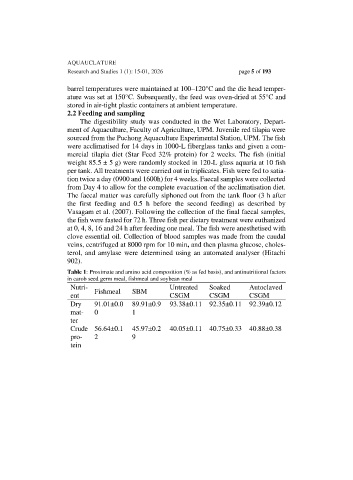
                        Table 1: Proximate and amino acid composition (% as fed basis), and antinutritional factors
                        in carob seed germ meal, fishmeal and soybean meal
                         Nutri-  Fishmeal     SBM         Untreated     Soaked       Autoclaved
                         ent                              CSGM          CSGM         CSGM
                         Dry     91.01±0.0    89.91±0.9   93.38±0.11  92.35±0.11  92.39±0.12
                         mat-    0            1
                         ter
                         Crude  56.64±0.1     45.97±0.2   40.05±0.11  40.75±0.33  40.88±0.38
                         pro-    2            9
                         tein

